


Video game film adaptations have a long, complicated history. Well, it’s really not that long. It’s not complicated, either. They’re mostly bad. We’ve finally hit a comic book movie renaissance, and those seem to be pretty good now, but art of video games made into movies still has a ways to go to get their due on the silver screen.
It’s not for lack of trying. Plenty of talented, passionate people have tried adapting video games into films, but for some reason or another they almost always end up subpar. It doesn’t help that many games on this list aren’t exactly easy to adapt. Super Mario Bros. may have a premise, but it doesn’t really have a plot, at least it didn’t way back in 1993.
Here are the most notable video game adaptations we’ve had, including some that flew under the radar. Almost all of them had a rough time at the box office and in critic’s circles. Don’t get your hopes up.
Mortal Kombat (1995) Dir: Paul W. S. Anderson


Years before he kicked off the Resident Evil film franchise, Paul W. S. Anderson brought the controversial Midway Games fighter to life in Mortal Kombat. The film centered around Liu Kang, Johnny Cage, and Sonya Blade as they followed the god Raiden to Outworld for a fighting tournament that would decide the fate of Earth. It came out the same year as Mortal Kombat 3 hit the arcades and the supporting cast featured a hodge-podge of characters from the first few games.
The film made $122 million on an $18 million budget, making it the fourth highest-grossing video game film of all time. Critically, the film was less successful, but it had its champions. Gene Siskel of Siskel and Ebert actually gave the film a thumbs up, calling it “the only half way decent video game movie [he] has ever seen.” That’s a compliment, right?
Here’s the real compliment: it’s not Mortal Kombat: Annihilation
Mortal Kombat: Annihilation (1997) Dir: John R. Leonetti

Yikes. The original Mortal Kombat holds a score of 33% on Rotten Tomatoes, which isn’t good, but it’s ten times the score that the sequel managed. That’s right, Mortal Kombat: Annihilation holds a whopping 3%. That’s one rotten tomato. Even worse, Mortal Kombat co-creator Ed Boon considers the film to the be the “worst moment” in the franchise’s history. Over the years, the film has gained some popularity with the so-bad-it’s-good crowd, but that’s not much of a compliment.
Thanks to die-hard Mortal Kombat fans, the film still managed to pull in $51 million on its $30 million budget, but that’s not exactly a runaway success, and the already-planned sequel was shelved due to the disappointing box office and critical thrashing the film got. It was tinkered with for years, but languished in development hell. In 2009, Linden Ashby claimed that he was reprising his role of Johnny Cage in the third film (despite being recast and killed off in the this film), but nothing ever came of it.
Doom (2005) Dir: Andrzej Bartkowiak


Before he was known the world over as Dwayne Johnson, professional wrestler The Rock headed up this loose adaptation (I feel like I’m going to be using the words loose adaptation a lot) that sees a squad of Marines head to a research facility on Mars to investigate a distress call.
It’s ironic that a man who spent years doing wonderful cinematography work would go on to direct a film with poor cinematography. And that was far from the only problem with Doom, a film many consider to be an uninspired Aliens knock-off. Not only did it fail to garner many positive reviews, it also failed to make its budget back at the box office, cementing its status as a bomb in the worst sense. Luckily for us, it didn’t seem to hurt the careers of Dwayne Johnson or Karl Urban.
Street Fighter (1994) Dir: Steven E. de Souza


For many moviegoers, 1994’s Street Fighter was probably the film that made them realize that video game adaptations don’t have to follow the plot of the game – not even a little bit. While Mortal Kombat stuck with the fighting tournament premise, de Souza’s film turned Street Fighter into a politically-themed large-scale battle of good versus evil. Raul Julia gave a wonderful scenery-chewing performance as maniacal dictator M. Bison in what was sadly his last role before his death.
The film earned many negative reviews and makes regular appearances on lists of the world video game adaptations of all time. Despite this, it tripled its budget at the box office, though a direct sequel was never made. A post-credits scene revealed that Bison had survived the events of the movie, but was cut from the theatrical run out of respect to the late Raul Julia.
Super Mario Bros. (1993) Dir: Annabel Jankel, Rocky Morton


Oh boy. Opinions on Super Mario Bros. seemed to be mixed between “it’s so bad” and “it’s so bad it’s good,” but it’s managed to become something of a cult film. For most, not even the late great Bob Hoskins and Dennis Hopper could save the doomed adventures of Mario Mario and Luigi Mario. However, it has to be asked: how does one make a faithful Mario Bros. movie? It had King Koopa, Toad, Yoshi, and even its own version of Big Bertha, which was just a lady in a spiked, red leather outfit. Alright then.
The film was a box office bob-omb, earning $20 million on an almost $50 million budget. The studio originally wanted Arnold Schwarzenegger for King Koopa, but he passed on the script. It’s too bad, because he could’ve been the power-up the film needed to make bank.
Double Dragon (1994) Dir: James Yukich
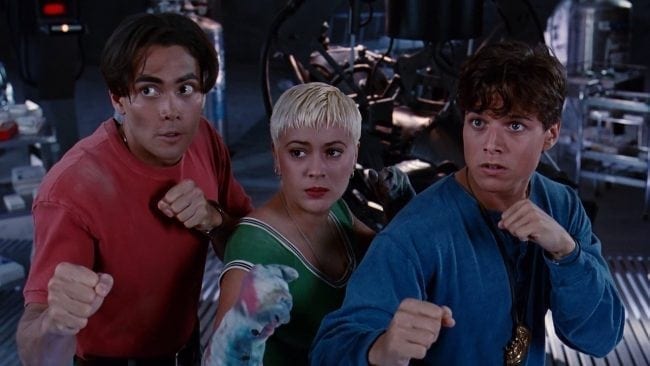
The early-to-mid nineties saw a few seasons of a Double Dragon cartoon, which in turn influenced a live-action film. The brothers, Billy and Jimmy Lee, were played by Scott Wolf of Party of Five fame and Mark Dacascos, star of a myriad of direct-to-video films and the host of Iron Chef America.
Not excited yet? Big baddie Koga Shuko was played by none other than the T-1000 himself, Robert Patrick. Oh, and the film takes place in a somewhat post-apocalyptic Los Angeles circa 2007. Vanna White and Andy Dick appear as a news anchor and weatherman, respectively. Wait, it gets better.
The film was made for a measly $7.8 million, but managed to gross only $2.3 million. It was universally panned and a controlled explosion using 700 gallons of gasoline and 200 gallons of alcohol prompted over two-hundred phone calls to emergency services from scared Ohio residents. I told you it got better.
Final Fantasy: The Spirits Within (2001) Dir: Hironobu Sakaguchi
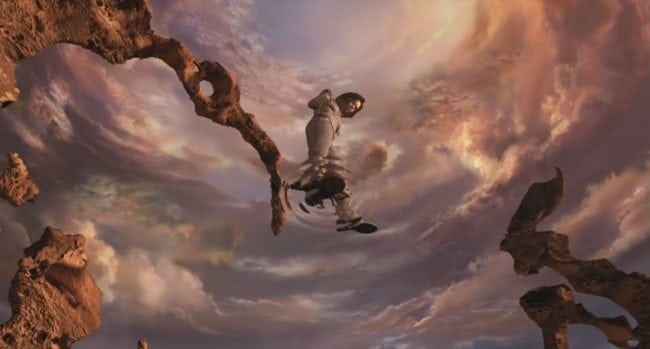

We tend to laugh at a lot of early computer-generated effects when we look back on them, and while the CGI in The Spirits Within is unmistakably dated, it’s hard not to appreciate how amazing it looked at the time. Roger Ebert gave the film 3.5 out of 4 stars, calling it a “technical milestone.” The impressive qualities didn’t end with the effects either.
The film had a top-notch voice cast including of Alec Baldwin, James Woods, Donald Sutherland, and Steve Buscemi. The lead role of Aki Ross was voiced by Ming-Na Wen, who most probably know as Agent Melinda May on Agents of S.H.I.E.L.D., the television counterpart to Marvel’s cinematic universe.
However, you can’t win them all. The film’s critical reaction was mixed at best, it failed to make back its budget by a healthy margin, and its computer-generated lead character was voted one of the sexiest women of 2001 by Maxim and its readers. I don’t consider that a win.
Silent Hill (2006) Dir: Christophe Gans


The filmmakers behind Silent Hill understood something very important about video game adaptations: capturing the spirit of the game is much more important than meticulously adapting the story. Christophe Gans’ film took elements from the first four games and weaved them into a original patchwork story that managed to hit the series’ themes while looking a hell of a lot like Silent Hill. Sean Bean has a role in the film, and in a surprising turn of events (spoiler alert), he makes it to the end of the film alive and well.
The film wasn’t received very favorably by critics (sensing a theme here?) but almost everybody seemed to compliment the film’s aesthetics, and to be honest horror film aesthetics go a long way in contributing to how scary the film is. Despite its negative reviews, it still managed to double its budget and earn a sequel.
Hitman (2007) Dir: Xavier Gens


When the Hitman film was first announced, Vin Diesel was attached to not only executive produce but to star in the film as well, playing the lead role of Agent 47. The casting was perfect. Diesel, like the titular character, didn’t have any hair on his head. Three years and zero films later, Diesel stepped away from the movie.
That led everyone to speculate on who would don the infamous black suit and red tie, with many feeling that the obvious choice for a bald, British, suit-wearing assassin was Jason Statham, who more or less played the same role in the Transporter films. Instead, the producers threw a curve ball and went with a bald and very American Timothy Olyphant.
Roger Ebert gave the film three stars out of four, but he was more or less alone in his fondness for the film – at least among critics. Despite a 14% rating on Rotten Tomatoes, the film quadrupled its budget.
Hitman: Agent 47 (2015) Dir: Aleksander Bach


Eight-ish years after the first Hitman movie was a flop, Hollywood decided to try again. Hitman: Agent 47 wasn’t a remake, but simply another adaptation of the video game franchise. Proving that money trumps acclaim, the producers hired Skip Woods – the man who wrote the first critically-smashed yet commercially-successful film – to pen the new film. It starred Rupert Friend of Homeland fame as the titular Agent 47.
The film went on to double its budget, earning $82.3 million over the $35 spent making it, but somehow managed to score even lower on Rotten Tomatoes than the 14% its predecessor netted. It managed a measly 8%, with critics accusing it of being hollow and dull, as well as guilty of product placement. Some also mentioned how the film even failed to clear the embarrassingly low bar set by the first film.
Pixels (2015) Dir: Chris Columbus

So, this thing. Adam Sandler seems to represent the line dividing paid film critics and the general moviegoing audience. His filmography has been on a largely downward critical trend for the past decade or so, and yet he remains one of the most reliable box office draws working. He knows what his fans like and he appeals directly to that. In this case, what they like is gaming nostalgia.
Pac-Man. Donkey Kong. Q*bert. Kevin James. All your favorite larger-than-life characters are here, and Adam Sandler is here to destroy them all. Unsurprisingly, critics ravaged the film, using video game references to deliver their beat downs. Also unsurprisingly, it cleaned up pretty well at the box office, making about $245 million on a $129 million budget. Adam Sandler was nominated for both a Golden Raspberry Award for Worst Actor and a Teen Choice Award for Choice Summer Movie Star. The man is an enigma. We may never understand him.
Prince of Persia: The Sands of Time (2010) Dir: Mike Newell


Primarily based on the video game of the same name, Prince of Persia: The Sands of Time also incorporates elements from Warrior Within and The Two Thrones, the other two games that make up the trilogy. It stars Jake Gyllenhaal as Dastan, the titular Prince of Persia, and despite a strong supporting cast that includes Alfred Molina and Ben Kingsley, the film was met with a fairly negative reaction.
Like many other movies on this list, however, the bad critical reception didn’t hurt its box office take, and Prince of Persia managed to earn $336 million, doubling its budget. Despite its financial success, the film never saw a sequel, which is especially odd considering that there are more games to mine from. We all know how Hollywood loves their sequels. Ubisoft shared cinematic universe, anyone?
Need for Speed (2014) Dir: Scott Waugh

A film adaptation of a racing sim? Why, that’s almost as foolish as adapting a fighting game! And yet in 2015, Need for Speed raced into theaters, with Breaking Bad-star Aaron Paul in the driver’s seat. It also featured Dominic Cooper, star of AMC’s Preacher, as a rival racer, Imogen Poots, Kid Cudi, and Michael Keaton as Monarch Maddon, the host of an underground racing competition. Hey, with the Fast and Furious movies being the smash hits that they are, why not?
The film only managed a 23% on Rotten Tomatoes, but it had its champions, who praised Need for Speed as a fun, amped-up B-movie. The film managed to rake in $203 million on its $66 million budget, making it a bonafide success. A sequel is currently being developed, with plans to shoot and set the film in China, though it’s unknown which of any of its stars will return.
The King of Fighters (2010) Dir: Gordon Chan

With The King of Fighters, I am encroaching dangerously far into our own Michael Kwan’s territory. He’s the fighting game aficionado, and I’m just a guy who thinks that maybe fighting tournaments make for pretty thin movie premises. Then again, Jean Claude Van-Damme wouldn’t have a career without them. Everything exists for a reason.
The King of Fighters movie went straight to video and didn’t garner very positive reviews. The biggest names in the film, at least to American audiences, are Ray Park and Maggie Q, and even their impressive physicality couldn’t save the film from the bargain bin.
Fans of the game shouldn’t despair, though, as there are already talks about not only a live-action reboot but an anime one as well. Long live The King of Fighters?
Max Payne (2008) Dir: John Moore

More like max pain, am I right? This 2008 adaptation starred “Marky” Mark Wahlberg in the title role and Mila Kunis as femme fatale Mona Sax. Rounding out the cast were Beau Bridges, Donal Logue, Chris O’Donnell, and Ludacris as Lieutenant Jim Bravura.
Thanks to its “illogical plot” and some “overdirection” (if you’ve seen the movie, you’ll understand), the movie was panned across the board, and Mark Wahlberg was nominated for a Razzie for his performance. It certainly didn’t help that The Happening was released the same year. It wasn’t a good year for Marky Mark.
The film grossed $85 million, $50 million over its budget, but thankfully it wasn’t enough of a hit to secure a sequel. 3D Realms CEO Scott Miller was unhappy with the film’s story, which deviated from that of the video game series. Oddly enough, the game series was critically acclaimed for its story in particular.
Warcraft (2016) Dir: Duncan Jones

Twenty-two years after Warcraft: Orcs & Humans hit PC, the Warcraft film – directed by Moon and Source Code helmer Duncan Jones – hit theater screens. With over two decades of lore to pull from, Jones and co-writer Charles Leavitt delivered a film that Rotten Tomatoes summed up as a “derivative adaptation,” making the film seem like the biggest missed opportunity of all time.
However, with millions of people still playing World of Warcraft some twelve years after its launch, it wasn’t like the movie was going to be a commercial failure. As of the time of this writing, the film has made $433 million on a budget of $160 million, making it the highest grossing video game adaptation of all time.
With numbers like that, it’s safe to say a sequel is a lock, and there’s more than enough lore to make Warcraft a sprawling franchise.
Street Fighter – The Legend of Chun-Li (2009) Dir: Andrzej Bartkowiak

Street Fighter: The Legend of Chun-Li isn’t a sequel to the 1994 Street Fighter (in which Chun-Li was played by Ming-Na Wen of Marvel’s Agents of S.H.I.E.L.D.), nor is it a remake, but simply another adaptation.
This time around we follow Chun-Li in her quest to rescue her kidnapped father from Street Fighter baddie M. Bison (played here by Arrow’s Neal McDonough). Several other Street Fighter characters – named the “bad” guys – make appearances, including the late Michael Clarke Duncan as the boxer Balrog. Robin Shou, who played Liu Kang in Mortal Kombat, shows up here as Gen.
While the film only holds a 6% on Rotten Tomatoes, it once held an 18% thanks to a bug that mistakenly assigned the film reviews from David O. Russell’s much-better reviewed The Fighter. I imagine the Legend of Chun-Li producers were thankful for the assist.
Ratchet and Clank (2016) Dir: Kevin Munroe

Unlike most of the other films on this list, Ratchet and Clank didn’t go the live-action route (despite Guardians of the Galaxy proving that CGI animals can look amazing alongside humans), opting instead to stick with computer animation, so the end result didn’t look all that different from the cutscenes in the more recent games in the series. James Arnold Taylor and David Kaye reprise their roles as Ratchet and Clank, respectively, while John Goodman, Rosario Dawson, and Paul Giamatti voice additional roles in the film.
Ratchet and Clank opened to little fanfare, so it’s no surprise that it only made $12.5 million, which still didn’t make back its already low $20 million budget. It holds a 17% on Rotten Tomatoes, with critics saying that the film would satisfy young viewers but offers nothing for more mature audiences.
Like the Max Payne film, some critics couldn’t help but mention how much more entertaining the Ratchet and Clank games are than the film itself.
DOA: Dead or Alive (2006) Dir: Corey Yuen

Dead or Alive is a fighting game franchise primarily known for having bouncing breasts as an adjustable feature, so I don’t think anyone was surprised when a feature film adaptation based on the franchise managed to flop. The film was directed by Corey Yuen, who has helmed many of Jet Li’s American movies, and produced by none other than Resident Evil-helmer Paul W. S. Anderson.
The film only managed to gross $7.5 million on a $21 million budget, but like Ratchet and Clank, the film came and went without much marketing, dooming it to its fate. It managed to pull a 34% on Rotten Tomatoes, which as far as video game adaptations go isn’t too terrible. It was praised for being “pure entertainment” and compared favorably to Charlie’s Angels. Retired professional wrestler Kevin Nash had a small role as a very Kevin Nash-like character.
Wing Commander (1999) Dir: Chris Roberts


Remember Wing Commander? For that matter, remember Freddie Prinze Jr. and Matthew Lillard? Wing Commander was a series of space combat sims arguably best known for their full-motion video cutscenes. The film came out in 1999, with Prinze Jr. hot off I Know What You Did Last Summer and its sequel. Lillard was fresh off of the indie hit SLC Punk! And both actors shared the screen in the romantic comedy hit She’s All That, which hit theaters the same year as Wing Commander.
Video game film adaptations were still a pretty uncommon things so fans, maybe not knowing what to expect, criticized the film for its departures from the games that spawned it. Critics weren’t any friendlier, complaining about the cheesy effects, bad dialogue, and reliance on science fiction cliches. The film holds a 10% on Rotten Tomatoes. If only critics were familiar with the games that preceded the movie, they might have been prepared.
The Angry Birds Movie (2016) Dir: Clay Kaytis, Fergal Reilly

The Pirates of the Caribbean franchise opened the door for anything to be turned into a film. Once Disney decided that a theme park ride needed a film adaptation, all bets were off. Now, thirteen years later, a film based on a mobile game with nothing more than the barest premise doesn’t seem that weird at all. And so we got an Angry Birds movie, cleverly titled The Angry Birds Movie. In fact, the only strange thing about it was that people didn’t universally hate it.
Yes, because of some decent gags and a strong voice cast, The Angry Birds Movie managed a 43% on Rotten Tomatoes. According to common complaints, the film felt long even at 95 minutes and there were some disturbingly xenophobic undertones, but gosh darn it kids loved it and the adults that took them didn’t want to claw their eyes out. That has to count for something, right?
Assassin’s Creed (2016) Dir: Justin Kurzel

Set to release on December 21st, 2016, the Assassin’s Creed film takes the basic premise of the video game series and wraps it around a somewhat original story with new characters created specifically for this adaptation. Donning the familiar assassin’s robe is Michael Fassbender, a German-Irish actor possibly best known for portraying the younger version of Magento in X-Men: First Class and its two sequels. He also played a sex addict in the critically-acclaimed Shame, but let’s just move on.
An Assassin’s Creed movie has been in the works since 2011, four years after the release of the first game in the series. Like most films that spend time in development hell, various names were attached throughout the process, both in front of and behind the camera. Justin Kurzel, who directed 2015’s Macbeth (also starring Fassbender), eventually landed the job of helming the film, and his eclectic body of work makes him an interesting choice. 20th Century Fox is eyeing a potential franchise with the film, but who isn’t nowadays?
Dead Rising (2015, 2016) Dir: Zach Lipovsky, Pat Williams

Instead of being an adaptation of the game, Dead Rising: Watchtower featured an original story set between the events of the second and third games in the series. However, it featured a reporter covering a zombie outbreak in a small town, which is the same premise as the 2006 game. So they found a way to adapt the game while also not adapting the game. Or something. Rob Riggle (The Daily Show, 21 Jump Street) plays series protagonist Frank West in a supporting role.
Instead of heading to theaters, the film went straight to Crackle, the online streaming service possibly best known for Jerry Seinfeld’s interview series Comedians in Cars Getting Coffee. The film received mixed reviews, but the powers-that-be must have thought it was a worthwhile effort, because a sequel was released the following year. Dead Rising: Endgame retained a few key members of the first cast while adding a few new faces, including Canadian actor Victor Webster as Dead Rising 2 protagonist Chuck Greene.
Batman: Assault on Arkham (2014) Dir: Jay Oliva, Ethan Spaulding

There have been so many animated Batman movies that it would be very easy to miss this tie-in to the Arkham series of video games. According to director Jay Oliva, the film takes place two years before the events of Batman: Arkham Asylum. Though it focuses primarily on the Suicide Squad (many have pointed out the similarities between this and the live-action Suicide Squad film), Batman is involved in a major supporting role.
While it can be hard to gauge the critical response to direct-to-DVD animated films, Assault on Arkham earned its fair share of praise, especially among fans of DC’s animated outings. Many considered it to be stylish and mature, with one critic humorously saying it represented something would never be approved as a live-action film. Fan favorite Kevin Conroy returned to voice Batman, Troy Baker the Joker, and Nolan North voices KGBeast and The Penguin!
Red Faction: Origins (2011) Dir: Michael Nankin

Red Faction: Origins is technically a SyFy original movie, and I understand if you just shuddered a little bit. Images of dinosharks and piranhacondas sprung to mind, all wrapped up in a hellish sharknado. Red Faction: Origins wasn’t like that, probably because they had source material to draw from that prevented them from making a chimpantiger or something equally ridiculous.
Red Faction: Origins was a prequel to Red Faction: Armageddon that featured Red Faction: Guerrilla protagonist Alec Mason, played by Robert Patrick in his second appearance on this list. The movie was intended to serve as a two-hour pilot, yet despite positive feedback the ensuing television show never got picked up. IGN gave the movie a 7 out of 10 and praised it for being a better film that its big-budget, box office counterparts. It’s a shame that the show never went anywhere.
Dead Space (2008, 2011) Dir: Chuck Patton, Mike Disa

The Dead Space series spawned not one but two animated films. The series has nothing to do with the 1991 Dead Space starring Bryan Cranston, but boy do I wish there was a connection. The first of the two, Dead Space: Downfall, serves as a prequel to the first game and debuted on the SyFy channel. The sequel, Dead Space: Aftermath, takes place between the first two games and went straight to DVD and Blu-Ray alongside Dead Space 2.
The more obscure the movie gets, and the more the target demographics are whittled down, the harder it becomes to gauge critical reception. That said, if a sequel was made, than the first film obviously did something right. No other films were produced, animated or otherwise, but the Dead Space series has seen plenty of comic book spin-offs. People just have to get their Necromorph fix, I guess.
Final Fantasy 7: Advent Children (2005) Dir: Tetsuya Nomura, Takeshi Nozue


While Final Fantasy: The Spirits Within was all well and good (depending on who you ask, I suppose), Final Fantasy 7: Advent Children seemed like much more of a sure thing. It’s set in the world of Final Fantasy 7 and actually features the game’s protagonist Cloud Strife. It was CGI, not live-action, and the animation was generally praised. There’s something delightful about watching a video game movie that could very well be a cutscene from the video game.
Critical response was mixed, and non-gamers almost unanimously found the plot to be confusing. Some gamers defended the film by saying that the plot was no more confusing than the game’s plot, which has to be one of the all-time greatest defenses of anything. The film went straight to video, where it found modest success, but its greatest triumph is likely the sales boost the PlayStation 3 console had in the film’s first week of release. I guess synergy really is a thing.
Pokemon (1998 – Current) Dir: various


Being an animated property, it’s easy to assume that Pokemon direct-to-video movies have flourished in Japan, but in truth there have been twenty theatrical releases, the most recent being in July 2016. The eighteenth film in the franchise, which hit theaters in Japan in July 2015, only grossed $22 million USD, making in the lowest grossing film in the franchise. The most recent film already holds the record for second-lowest opening weekend in that franchise.
It will be interesting to see if Pokemon Go can bring people back to the theaters. That’s obviously what Legendary Entertainment is counting on, as they won the rights to produce the first live-action Pokemon film, which will be based on Detective Pikachu, a character introduced in a 2016 Japanese Nintendo 3DS release. Forget about catching them all, now you “gotta solve’em all.”
Resident Evil (2002 – Current) Dir: Paul W. S. Anderson, various

Way back in 2002, Mortal Kombat director and schlock genius Paul W. S. Anderson wrote and directed a film adaptation of Resident Evil, borrowing just enough elements from the first two games in the series to make it feel faithful while delivering a plot that clearly appealed to mainstream moviegoers, as the film pulled in $102 million on a $35 million budget. Critically the film was much less successful, though Titanic and Avatar filmmaker James Cameron has said that Resident Evil is his biggest guilty pleasure.
Then, something weird happened.
The series kept going, and kept making money, all the while diverging from the source material further and further. The films retained the characters, and the Umbrella Corporation, but in a lot of cases it was in name only. Anderson, who has written every film and directed three of them (and will direct the sixth and final installment in 2017), has taken the groundwork and created his own mutation, not unlike the horrors found in the video game series.
Uwe Boll’s “Movies” (Too Long) Dir: Uwe Boll, Unfortunately

While I considered sending German filmmaker Uwe Boll straight to the burn ward by leaving his name off of a list of video game film adaptations, I think it would be more fun to talk about the man who has literally climbed into a boxing ring and punched several of his critics in the face.
The man who wanted to direct the recent Warcraft movie but was told by Blizzard that he “especially” would not get the rights. A man who frequently uses a derogatory term for the mentally handicapped to lash out at anyone he dislikes. The man who used German government tax incentives to fund his movies when nobody else would, and then ran a horribly failed Kickstarter campaign to fund another movie when Germany changed their laws. And when that Kickstarter failed, that derogatory term came flying again, and Boll insisted he’s “the only genius in the whole f**king business.”
Maybe he’s the guy to make a proper Street Fighter movie.