


As a kid growing up in the 80s and 90s, I was influenced by a lot of things. I gravitated toward Hulk Hogan, Macho Man and professional wrestling. I thought I was a young thug listening to west coast gangsta rap. And I played video games. A lot of video games. And these video games, for better or for worse, have really shaped me into the person writing these words here today. And I’m certainly not alone.
While video games had technically already been around for a couple of decades, they really came into their own during the 1990s and really made their way through mainstream culture. It was during this time that many of today’s major game genres were established by industry-defining titles. From fighting games to RPGs, real-time strategy to first-person shooters, the 90s were where it was at and we’ve all been irreversibly altered as a result.
The following list is presented in no particular order, but with the caveat that only one title from any series can be represented. Let’s get started.

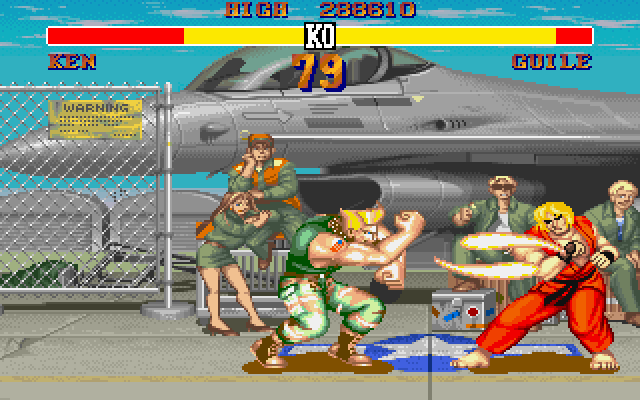
Image credit: FightersGeneration.com
Street Fighter II
So, I’m clearly a little biased here, as I’m a huge fan of Street Fighter, but the entire fighting game genre likely would not even exist if it were not for Street Fighter II. Discovering “special moves” for the first time, choosing iconic world warriors, and engaging in the mind games of true player vs. player combat was really something else.
It’s positively undeniable that countless titles that came out in the years to follow were heavily inspired by Street Fighter II. If you were lucky enough to experience the culture of placing a quarter on the screen ledge to call next, if you were lucky enough to body the other kids at the laundromat, and if you’ve ever attempted Guile’s handcuff glitch, then you’ll know why Street Fighter II is the first title on this list.
You must defeat Sheng Long to stand a chance.

Image credit: Brutal Gamer
Mortal Kombat
If Street Fighter II defined the fighting game genre, then Mortal Kombat rips its head out of its body and spewed blood all over your face.
While the exact game mechanics didn’t change the game, almost everything else about Mortal Kombat did. Rather than simply draw up the characters, they digitally captured actual actors. Rather than imply violence, Mortal Kombat went completely over the top with its gore and fatalities.
In fact, the whole ESRB rating system for video games is largely credited to the backlash that Mortal Kombat got for the level of violence and gore it depicted. This paved the way for so many more “mature” games that all the kids clamored over, even if the Super Nintendo version got all kinds of nerfed with its grey “blood” and tamed finishers. Get over here!
Image credit: ModDB
NHL ’94
This is clearly the Canadian in me coming through, but I wouldn’t be a “good Canadian kid” (hat tip to Don Cherry) if I didn’t include EA’s NHL ’94 on this list.
While the overwhelming majority of sports game up until that point had featured fictional players from made-up teams, NHL ’94 let hockey fans really play as the same superstars who hit the real life ice. You had line changes, full seasons, and crazy multi-player action.
And, for better or for worse, NHL ’94 also kicked off the tradition at EA to release updates to all its sports video games franchises on an annual basis. Some updates would be whole new games with a wealth of new features, whereas others were little more than roster updates. In either case, it was “in the game” until we arrived at the age of DLC.


Super Mario 64
I’ll admit that I was almost as excited as the Nintendo 64 kid when I was first able to play Super Mario 64. It was at the local summer fair and Nintendo set up several stations to try out both Super Mario 64 and Pilotwings 64 before the system was officially launched later that year. And the notion of taking everyone’s favorite plumber through an expansive three-dimensional environment was mind-blowing.
This completely revolutionized the notion of playing an adventure platformer, being able to move the camera around and having to line up your jumps in a 3D space.
I must have collected those 120 stars and shot myself onto the roof of the castle at least a half dozen times, not to mention wasting far too many hours trying to catch that stupid rabbit in the basement.


Image credit: Gamers Xtreme
GoldenEye 007
Before there was Call of Duty, before there was Halo, a group of four friends would huddle around the same Nintendo 64 and camp on the spot where the armor would re-spawn as they tried to peg each other off with the sniper rifle. And then they’d complain about the one nut job of a friend who would always choose stupid Oddjob in the deathmatch scenarios.
Because that’s just not fair. Especially if one of us chose Jaws for some inane reason.
This isn’t to discount the incredibly deep and satisfying single-player campaign in GoldenEye 007 either, even if the AI was nowhere near as advanced then as it is today. But really, it was all about those split-screen deathmatches and claiming that your buddy was obviously looking at your part of the screen. Now, where is that golden gun?


Image credit: Zelda Dungeon
The Legend of Zelda: A Link to the Past
The original Legend of Zelda on the NES was revolutionary for its time. The side-scrolling sequel, The Adventures of Link, wasn’t as exciting. That’s why it was so refreshing and so welcome when Nintendo took the franchise to its Super Nintendo and returned back to the top-down perspective and action-oriented gameplay of the original. But then it went further.
You could visit the exact same location twice and see two entirely different things. That’s because there was a Light World and a Dark World, a unique dichotomy that provided two connected but separate maps of Hyrule. And, come on, it’s freaking Link and Zelda.
Video games didn’t get much better than this; it’s no wonder A Link to the Past is oftentimes considered one of the greatest games of all time.


Image credit: Nubi Magazine
Doom
Clearly, I lied when I said that GoldenEye 007 for the Nintendo 64 was the one that defined the first-person shooter genre, because it wasn’t released until 1997.
The PC Master Race, as they now like to be called, were way ahead of the curve when Doom was released by id Software four years prior to that. You can’t talk about first-person shooters without mentioning Doom.
Navigating around those mazes and shooting up the creepy-looking hell spawn was thoroughly enjoyable for just about everyone. If nothing else, Doom was one of the titles to popularize the idea of shareware, as the first third of the game (consisting of nine episodes) was distributed for free as shareware. It was the free trial before free trials were a thing.

Image credit: 20 Minutos
Killer Instinct
ULTRA COMBO!!!! Street Fighter II popularized fighting games. Mortal Kombat made them particularly violent. And then Killer Instinct took it up another notch with incredible eye candy (at least in the arcades) and a ridiculous combo system.
It was positively unfathomable to string together a 20+ hit combo in other games, but a guy on fire, an ice alien, and a skeleton pirate could do it without a problem.
And let’s not forget about a Robocop-Terminator-Predator cybernetic mashup that had energy claws and shot lasers out of its eyes, all while rocking an overly confident ponytail like nobody’s business. Fulgore was my guy, but I think we were all amazed that Orchid could kill a guy by flashing her boobs.


Image credit: Anime Courtyard
Chrono Trigger
Otaku of the world unite. If there is a game that really brought the JRPG over to our North American shores, it was Chrono Trigger. Okay, it was probably the Final Fantasy series, but consider that Square gathered together a Dream Team of designers for this title.
They had Final Fantasy creator Yuji Horii, Dragon Quest creator Hironbu Sakaguchi and Dragon Ball artist Akira Toriyama. And let’s not forget the multiple endings that you could discover on this epic quest.
Featuring a great battle system, beautiful artwork, a deep and detailed storyline, and a soundtrack that really tugged at your heartstrings, Chrono Trigger set many a gamer on the path of many more JRPGs for the next 20+ years.


Image credit: Engadget
Metal Gear Solid
As big of a clear influence as Nintendo was on the video games industry as a whole, there were plenty of titles on the Sony PlayStation that utterly changed the game too. Easily one of the most influential has to be Metal Gear Solid, which is actually the third game in the Metal Gear series produced by the legendary Hideo Kojima. Rather than going in with guns a-blazing, MGS required gamers to utilize stealth.
Needless to say, I was and continue to be terrible at these kinds of games. I’m still fascinated by the patience and mechanics involved and the entirety of the stealth genre may not even exist today if it were not for Metal Gear Solid. Now, if only I could sneak past that guard and get to the elevator…
Snaaaaake!


Image credit: PS3 Maven
Final Fantasy IV (II)
Here’s a common point of confusion for anyone who isn’t really into role-playing games. Final Fantasy IV was originally released in Japan in 1991 to wild critical acclaim. It features the gorgeous artwork, intricate battle system, and amazing story-telling elements that are the signature of Square.
And then, the game was released outside of Japan as Final Fantasy II, not to be confused with the actual Final Fantasy II that was never released outside of Japan. Go figure.
Who can forget being introduced to the dozen different playable characters, each with unique attributes and character classes that completely altered the way you’d choose to play with them? Even if you’ve never played Final Fantasy, you’ll recognize Vivi. He’s the black mage with the pointy hat.

Image credit: Magisterrex
The Secret of Monkey Island
If you were to look at the vast majority of video games being released today, you’d conclude that most of them are being judged on pretty visuals and overly complex control schemes alone. Sometimes, we want to harken back to a time when games were simply and arguably even more fun.
And a prime example of this was The Secret of Monkey Island, a point-and-click adventure game developed by Lucasfilm Games. Yeah, as in Star Wars, but not Star Wars at all.
To be fair, some of the biggest reasons why people liked this game so much was because of its visuals and its control scheme. For me, it was about the humor. Titles like this proved that games didn’t always have to be so serious all the time. The focus was on exploration, interspersed with some good laughs.


Image credit: Giant Bomb
Sonic the Hedgehog
Genesis does what Nintendon’t. In the heat of the console wars of the 1990s, Sega took square aim at a certain goomba-squishing plumber by creating an iconic mascot of its own.
The difference was that this mascot was fueled by blast processing! In layman’s terms, it mean this spiny little bugger ran really, really fast, including going upside down in a few loop-de-loops.
Even the personality of Sonic was about bucking the trend and going against the status quo. The snarky blue speedster was a rebel and it shaped a whole generation of gamers with snarky attitudes. With or without blast processing.


Image credit: The Ultimate Gamer
Sid Meier’s Civilization
Hideo Kojima. Shigeru Miyamoto. There are just certain names in the gaming industry that are of a different caliber than all the rest and Sid Meier easily deserves to be on that list.
Along with Bruce Shelley, Sid Meier developed the turn-based strategy game called Civilization. Most of us know Civ from its PC version, but it was later ported over to other platforms, including a strange version of the Nokia N-Gage of all places.
The sheer scale and scope of Civilization is mind-boggling. You might start out with just a single settler unit, but you build that up to a massive empire that can span millennia through diplomacy, exploration and warfare. Playing alone was fun, but challenging several friends in a multiplayer environment was even more engaging and rewarding. It doesn’t get much more epic than this.

Image credit: MobyGames
Warcraft II
It is a good day to die. Make it so. Glittering prizes.
You know, it kind of surprises me that I still remember these cheat codes almost twenty years later. But when you’ve got orcs aiming to win the Tides of Darkness (because playing as the humans is just lame and boring by comparison), you’ll take whatever measures necessary to get the job done. Just as the first Street Fighter pales in comparison to its sequel, Warcraft II stands alone as a genre-defining title. Real-time strategy would not be where it is today if it were not for this Blizzard title from 1996.
All of the key ingredients are here. Gather your resources, erect buildings, expand your forces and engage in battle. The voice acting was strangely satisfying here too, don’t you think?


Image credit: GameQuiche
Alone in the Dark
You may have noticed that many of the titles on this list really helped to create or define a major genre of video games. And when it comes to being scared out of your wits with some survival horror, Alone in the Dark is one of those pioneering titles that inexplicably tossed you into a haunted mansion and tasked you with not dying.
And it wasn’t just about fear either. Alone in the Dark was also one of the first games to implement polygonal characters against more elaborate pre-rendered backgrounds.
Yes, these graphics are nothing like what we have today, but they represented a quantum leap in technology in 1992. This easily paved the way for enduring franchises like Resident Evil and Silent Hill.


Image credit: Bonus Level
The Secret of Mana
What’s that? Yet another Square-produced RPG making the list? To say that the genre and developer were both incredibly influential in the 1990s would be a severe understatement.
People loved these games and they could get enough of the beautiful artwork, amazing soundtracks and deep stories. Where Secret of Mana differed from series like Final Fantasy was that it abandoned the turn-based combat in favor of a real-time battle system like the Legend of Zelda games.
Because the action takes place in real time, you were given the opportunity to switch between the three members of your party, leaving the other two to be controlled by the computer (or by other actual people). The notion of having a fighter, a healer and a magic character sounds an awful lot like a ton of games we have today.

Image credit: GamePedia
Diablo
Oh, you know how I was just talking about how having different character classes is a dynamic that we see in all sorts of games now? That’s exactly what we got as we battled our way through darkened dungeons in search of baddies to slash apart in Diablo.
You had the Warrior with his close-up physicality, the Rogue with his projectiles at a distance, and the Sorcerer with his impressive magical spells.
I didn’t get into the franchise until Diablo II (Necromancer FTW), but we can all agree that transversing these isometric worlds while collecting items, leveling up our characters, and killing off hordes of enemies was about as satisfying as it gets. Well, it’s even more satisfying with multiplayer, of course, particularly considering how revolutionary the Battle.net system was for our decidedly slow Internet connections.


Image credit: Socks Make People Sexy
NBA Jam
Boomshakalaka! He’s on fire! Whereas NHL ’94 by Electronic Arts aimed to provide realistic action for hockey fans, Midway went in completely the opposite direction with 1993’s NBA Jam.
The basketball game got rid of the expected five-on-five dynamic in favor of a faster-paced two-on-two game with crazy dunks, foul-free pushing and the opportunity to get “on fire” for easy trifectas.
In addition to the full NBA license to feature real teams and real players, you could also enter all sorts of secret codes to unlock some really weird special characters like US President Bill Clinton and Vice-President Al Gore. And then, in the arcade, you could even save your season progress. To this day, I’m still sad that they couldn’t get Michael Jordan in this game. Sorry, Scottie and Horace. You guys just aren’t the same as His Royal Airness.


Image credit: Crave Online
Super Mario Kart
The cast of characters that Nintendo created for its Super Mario franchise is memorable and iconic. What if we took our friends from the Mushroom Kingdom, put them all on go-karts, and got them to hurl koopa shells at one another?
Just like Super Smash Bros that would come later on, Super Mario Kart gave us a whole new perspective on characters we already knew and loved.
From the bright colorful graphics to the kooky physics, the terrific track designs to the creative items, Super Mario Kart was way too much fun and it paved the way for so many other sequels that never really re-invented the wheel. I liked how the karts controlled in Mario Kart 64 better, since that’s when we first got the drift boosts, but Super Mario Kart will continue to hold a special place in all our hearts.

Image credit: IGDB
Twisted Metal 2
An entirely different kind of driving game than Mario Kart is Twisted Metal. And the second game in the series is the one that really takes the scary clown faced cake.
Released in 1996 for the Sony PlayStation (as well as Windows), Twisted Metal 2 isn’t so much about racing around the track to get the best time. It’s more of a demolition derby on steroids featuring all sorts of missiles and explosions for blast-happy mayhem.
Vehicular combat is a genre that is still under-explored to this day and it’s perfectly arguable that it hit its explosive peak with games like Twisted Metal 2. No one actually cares about the story or why we’re driving around shooting each other. We just care that it’s fun and destruction is pleasurable.


Image credit: GameSpot
Panzer Dragoon
One genre of video games that exploded in popularity during the 1990s, particularly in quarter-swallowing arcades across the country, was the on-rails shooter. More often than not, you’d take on the role of a police officer shooting at some bad guys. That’s what we saw in games like Lethal Enforcers and Virtua Cop. Panzer Dragoon was different.
For starters, it wasn’t in the arcade. Secondly, it didn’t involve some cop taking out the crooks at a crime scene. Instead, the Sega Saturn title got you to fly a blue dragon and shoot at other things flying around in the sky.
Remember that this wasn’t a top-down scrolling shooter like 1942 or Raiden; you flew this dragon in an artfully-done 3D environment, albeit on a predetermined track. And it looked great.


Image credit: OCRemix
Duke Nukem 3D
Games like Doom may have taken us down a path of no return for first-person shooters, taking ourselves all seriously as we gunned down our enemies. Duke Nukem 3D, on the other hand, gave the genre a giant dose of personality that may have been inspired by guys like Arnold Schwarzenegger (without the accent). In what other game would you hear your protagonist utter “Aaahh, much better” after implied public urination? It was inappropriate and crude, just like the title character.
The self-aware pop culture satire would leave you in stitches, from saying that the baddie is “ugly” (Predator) or exclaiming that you must “do, or do not, there is no try” (Star Wars).
And since Duke Nukem 3D was distributed as shareware, it was a game that a huge number of people got to enjoy from the comfort of their homes on computers that didn’t have to be all that powerful. Yeah, come get some!


Image credit: Paste
Resident Evil
Even though Resident Evil was not the first game in the survival horror genre, it may have been the one to really popularize the idea of fighting off zombies in a particularly scary environment.
The real-time 3D polygonal style really demonstrated the power that the Sony PlayStation could provide, but the game also came with a number of frustrating built-in restrictions that defined the series.
You couldn’t move the camera, so you’re stuck with a certain view. And you can only ever walk in a straight line, because you have to rotate your character first. Oh, and then there was the infuriating aspect of being unable to move and shoot and the same time. But somehow, those all added to the tension and we all still wanted to play this game. There’s a lot to be said about mood and atmosphere in a game.


Image credit: Zelda Informer
NiGHTS into Dreams
You know what’s one of the many things that Sega did right during the 90s? They had a ton of games that used really bright, colorful palettes. There’s Sonic the Hedgehog, of course, but you also see it in games like Samba de Amigo. It’s just super cheerful and you can’t help but to have a silly grin on your face the whole time. And the bright visuals of NiGHTS into Dreams is no exception.
Originally released on the Sega Saturn and ported over to the PlayStation 2 more than a decade later, NiGHTS into Dreams puts you into a dream world where you get to fly around with a weird jester-looking character named Nights. Go figure.
The 3D graphics were stunning and the gameplay was dynamic, offering both 2D and 3D elements as you go around collecting the chips and releasing the orbs.

Image credit: Agent Palmer
Quake
Doom gave us a hellish first-person shooter experience (in the best way possible). Duke Nukem 3D gave us a healthy dose of comedy to go with our big freakin’ guns. And Quake gave us yet another opportunity to yield some heavy artillery and blast away at some horrific monsters.
Navigating our way through the intricately-designed mazes gave us a great sense of exploration and the real-time 3D rendering really pushed the tech envelope of 1996.
The bigger deal here, though, was the online multiplayer. Quake deathmatches were so well done and id Software offered a number of features to amp up the online experience for everyone.


Image credit: DC Shooters
Virtua Fighter
What do King of Fighters, Mortal Kombat and Street Fighter all have in common? They’re fighting games on a two-dimensional plane. Virtua Fighter completely broke the mold to become the first ever fighting game to use 3D polygon graphics for everything, predating the Tekken series by almost a full year.
Even though the control scheme consisted only of three buttons and didn’t involve complex movements, the game engine was remarkably deep and only got more technical with future sequels. And then there was the ring out dynamic, which could play heavily into your strategy.
Despite the relative variety of characters, we all started with Akira or Jacky though, because they’re the Ryu and Ken of the series.


Image credit: GameReactor
Daytona USA
If the goal of an arcade machine was to inhale as many of your quarters as possible, then Daytona USA was the game that took home the checkered flag. Sega seemed bent on doing all sorts of 3D gaming in the 90s with titles like Virtua Fighter and Virtua Cop. Daytona USA went further by adding texture mapping for more realistic visuals.
In addition to the gorgeous graphics and the fun drifting mechanic, Daytona USA was just thoroughly satisfying as a real-time competitive racing game where you could link up against other players behind all those other arcade wheels.
Playing at home just wasn’t the same and that might explain why Daytona USA gobbled up so many of our quarters.

Image credit: Discover
Star Fox 64
Damn it, Peppy. Quit telling me to do a stupid barrel roll. And why is Slippy always getting himself in so much trouble that I have to save that stupid toad again?
Nintendo released hit after hit in the 90s and Star Fox 64 took full advantage of the improved processing prowess of the Nintendo 64. It even shipped with the optional rumble pak for an even more immersive experience, adding to the branching first-player campaign and epic multiplayer dogfights.
Needless to say, the graphics were dramatically improved over the original Star Fox from the SNES. You also got to get out of your Arwing and onto the ground with the Landmaster tank, as well as the lesser known Blue Marine submarine piloted by Slippy.

Image credit: Hive Gaming
Counter-Strike 1.6
All of the games on this list thus far have been official releases from “real” game development studios. Counter-Strike was entirely different in that it started out as just a mod of an existing game, Half-Life, and it was only later on that it was “officially” adopted by Valve.
That’s a really big deal, because it meant that the gaming community were no longer just passive consumers. We could be active creators… or modders, at least.
To this day, Counter-Strike remains a hallowed benchmark in what a competitive first-person shooter can and should be, especially with the added dimension of team and objective-based combat rather than the simpler, “free for all” deathmatch. The multiple major patches also demonstrated that games could evolve over time and that’s why I selected Counter-Strike 1.6 and not the “original” for inclusion here.

Image credit: Silent Hill Wikia
Silent Hill
If you want to talk about the importance of setting and mood in a game, if you want to illustrate some amazing world-building and story-telling, look no further than Silent Hill. The 1999 survival horror game was released on the PlayStation and uses a third-person view. However, it was utterly different than games like Resident Evil, because Silent Hill was so much more about atmosphere than anything else.
And it succeeded in spades. As a lone man venturing through the fictional town of Silent Hill, you had to look for your adopted daughter filled with foggy streets and dark secrets.
The intelligent use of the flashlight as the only means of seeing where you’re going really set the scene and ramped up the tingling feeling on the back of your neck.

Image credit: Wikipedia
SimCity 2000
Most of the games that you play have to do with beating your opponent in some way, whether that opponent is human-controlled or computer-controlled. The SimCity franchise is different, because it’s just about the simulation of building and maintaining your virtual city.
It’s like LEGO, but all the pieces are living and interact in amazing ways.
The second SimCity game was vastly better than the original by moving away from the boring overhead view to more of a three dimensional perspective. This let you handle different land elevations, as well as cool underground features. If it were not for SimCity, we’d never have the Tycoon series either.

Image credit: WTF Gamers Only
Pokemon (Red and Blue)
What happens when you effectively release exactly the same game in two different versions so that players with different versions will be extra-compelled to play with one another?
What if you really push for the whole completist movement by using “Gotta catch ’em all!” as your primary slogan?
The Pokemon games became and continue to be a huge cultural influence for way to many kids (and the young at heart), getting you to collect Pokemon, train them up, enter them into battle, and work to evolve them into their final forms. This spawned many more Pokemon titles that play on the same formula.

Image credit: VentureBeat
Starcraft
Blizzard Entertainment was at the top of its game toward the second half of the 1990s. We already got to enjoy the real-time strategy of Warcraft and RPG action of Diablo, but StarCraft elevated the experience to a whole new level with more science fiction, more units on screen, and more intense galactic combat.
Yes, it may be “just” another real-time strategy game, but you also have to realize that StarCraft may have been the title that really pushed e-sports in the forefront.
It’s because of games like StarCraft that pro players are vying for seven-figure pots these days and earning some real cash. Professional gaming is legit.


Image credit: MinesweeperWiki
Minesweeper
Forget about fancy graphics, amazing music or captivating storylines. It’s just about poking a square on a grid and deciding whether or not you think there’s a landmine under there.
Even if you’re not a gamer, you’ve surely used a Windows machine. And if you’ve used a Windows PC, particularly at work, then you’ve wasted some time procrastinating with Minesweeper.
And when you’re talking about “shaping a generation” with video games, it doesn’t get much more influential that this humble Windows 3.1 distraction.