


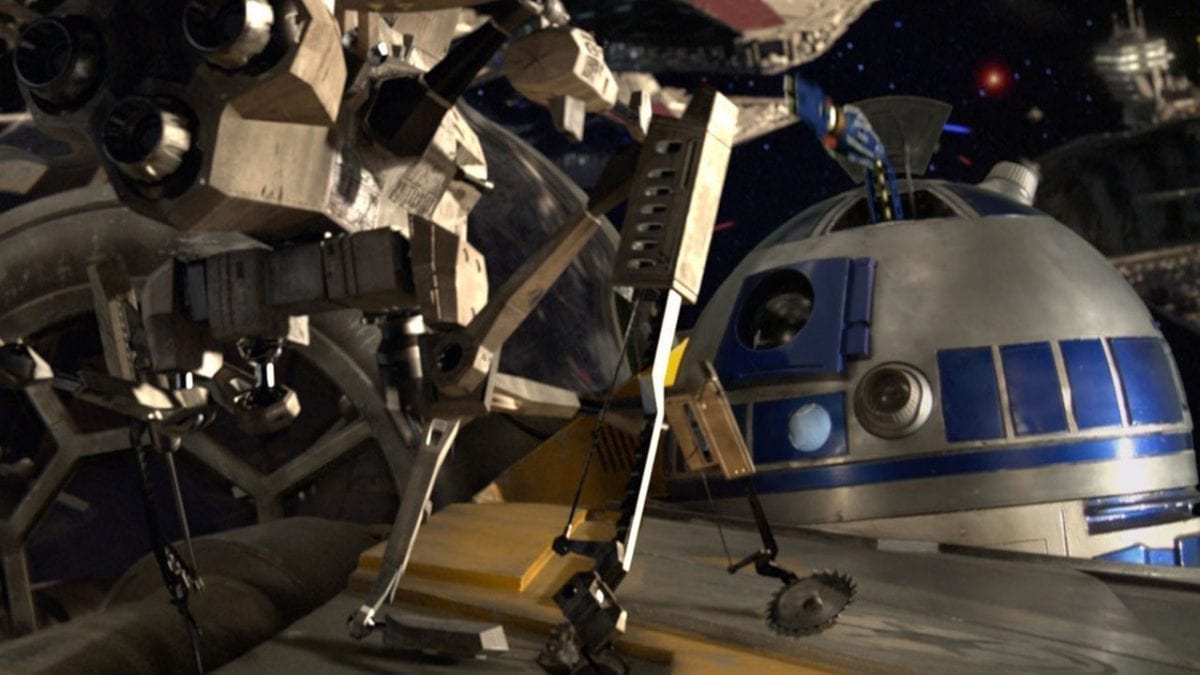
We all like to joke about the impending robot apocalypse; the hilarious, fiery doom that awaits us at the “hands” of sentient machines turning against their very creators. Good times. And though the merciless genocide of the human race may not actually come to pass, the automated takeover of the workforce is very real. So real, in fact, that it’s already happened in a lot of industries. We spend a lot of time talking about which jobs are going to be lost to automation, but the truth is it’s already been happening for over a century. That alone should calm down some of the hysteria. This isn’t the coming apocalypse, but rather the way the workforce has been developing for some time. That said, high unemployment rates are scary, so I’ve chosen to highlight thirteen jobs for maximum spookiness. So reach deep down and pull out your best South Park “they terk er jerbs” impression while we look at the past, present, and future of automation in the workforce.
Bank Teller/ATM


Though bank teller is still a very widespread profession and there are several things a bank patron might need to do that can’t be performed by an automated teller machine, ATMs remain one of the earliest and most successful examples of the automated workforce. Though little is known about the earliest incarnation of the ATM, a “Computer Loan Machine” operating in Japan in 1966, it’s widely accepted that the first official modern ATM went live in London, England, in June of 1967. The ATM actually predates the bank card, and the early models accepted paper checks issued by a bank teller or cashier. John Shepherd-Barron, whose team is credited with the invention and installation of the 1967 ATM, claimed that he thought of a chocolate bar dispenser and simply replaced the chocolate bar with cash.
Knocker-Up
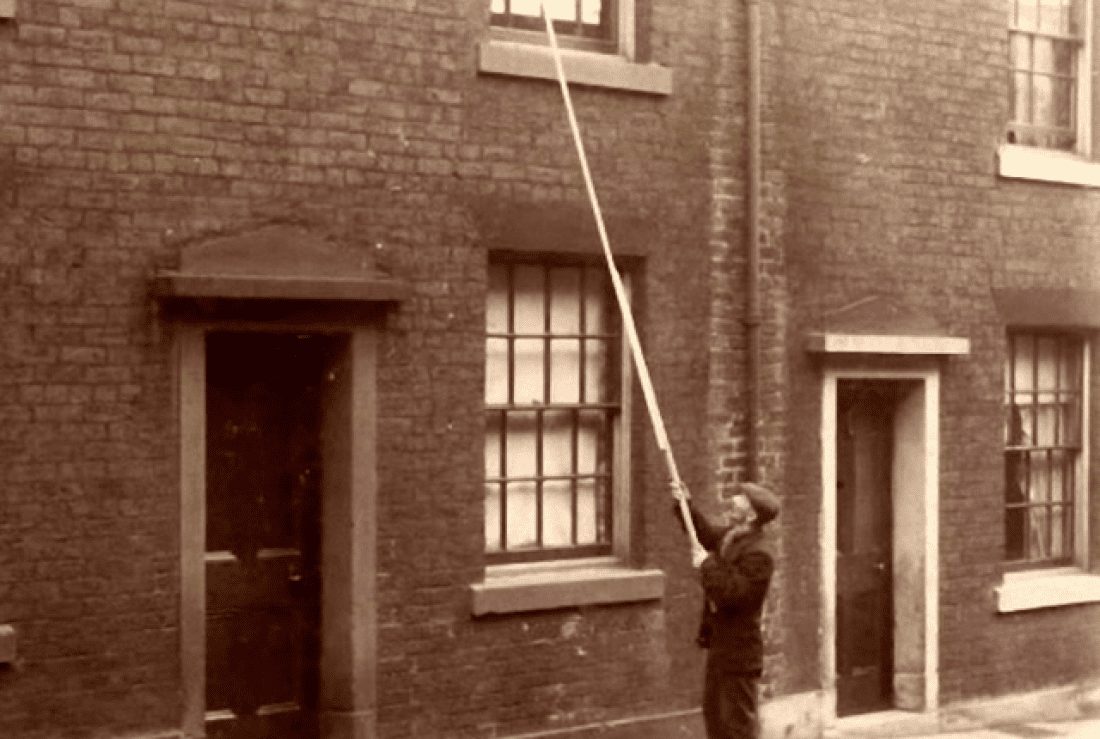

Nowadays everyone just uses their smartphone (and even pre-smart cellphones) to wake themselves up in the morning. Before that, there were a variety of dedicated alarm clocks throughout the decades. What about before those clocks existed, though? They had to be invented at some point, and then they had to become affordable and readily available. It’s hard to imagine such a time, but that time existed. Enter the knocker-up.
Alarm clocks weren’t cheap and they weren’t super reliable either. Britain and Ireland dealt with this problem using knocker-ups, men and women who would go window to window, knocking with a baton or a stick until they were sure the person was awake. They would sometimes use longer, lighter sticks or snuffer outers (tools used to put out gas lamps) to reach the windows of those on higher floors.
This job was often done by senior citizens who would collect a few pence a week, or police constables would do it on their morning patrols as a way to earn some side money.
Bowling Alley Pinsetter
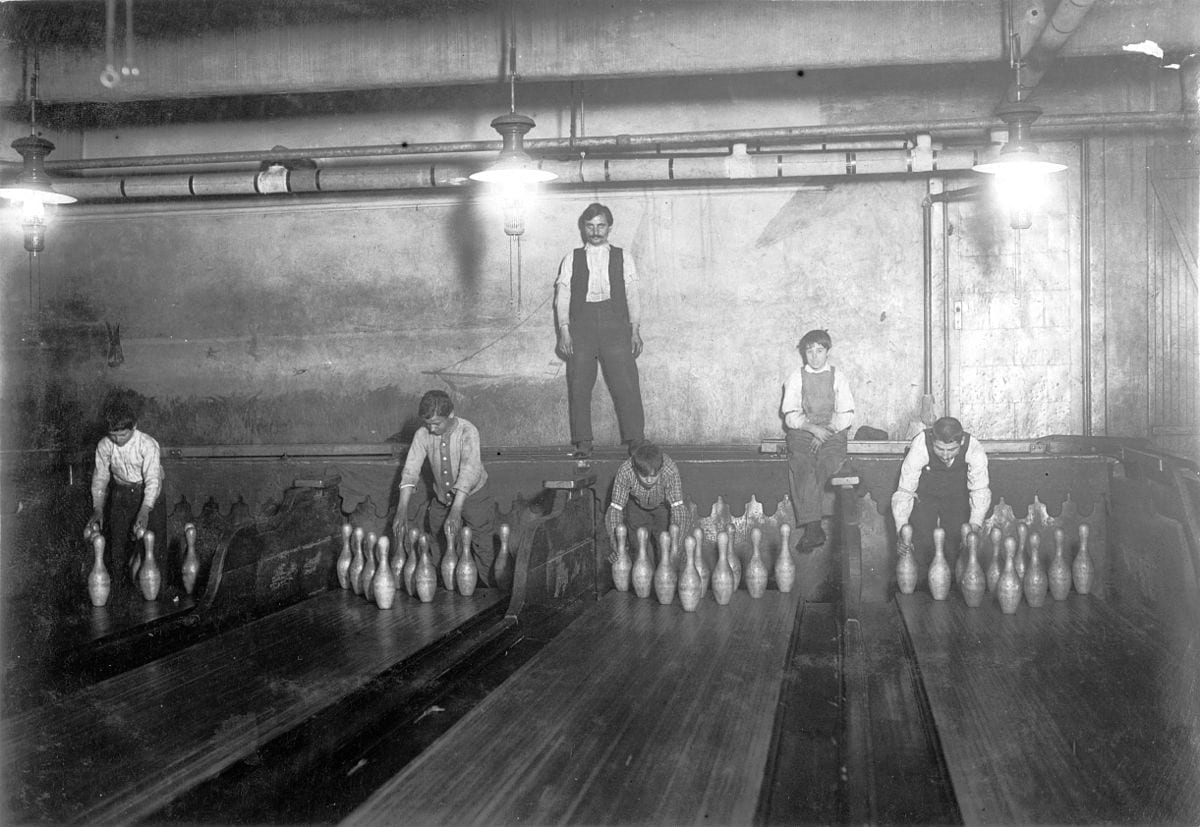

The earliest form of bowling dates back to ancient Egypt and despite what you might have learned from Ancient Aliens, they didn’t have mechanical pinsetters back then. The mechanical pinsetter was invented by Gottfried Schmidt, who sold the patent in 1941, more or less signing the death warrant for manual pinsetting as a profession. The occupation is often referred to as “pinboy,” because the job was regularly performed by teenage boys, on account of the low pay, low hours, and evening schedules. A rare few bowling alleys still employ manual pinsetters, though at this point it’s simply a novelty. A “pinchaser” is often employed, however, to monitor the machines and ensure everything runs smoothly.
Elevator Operator
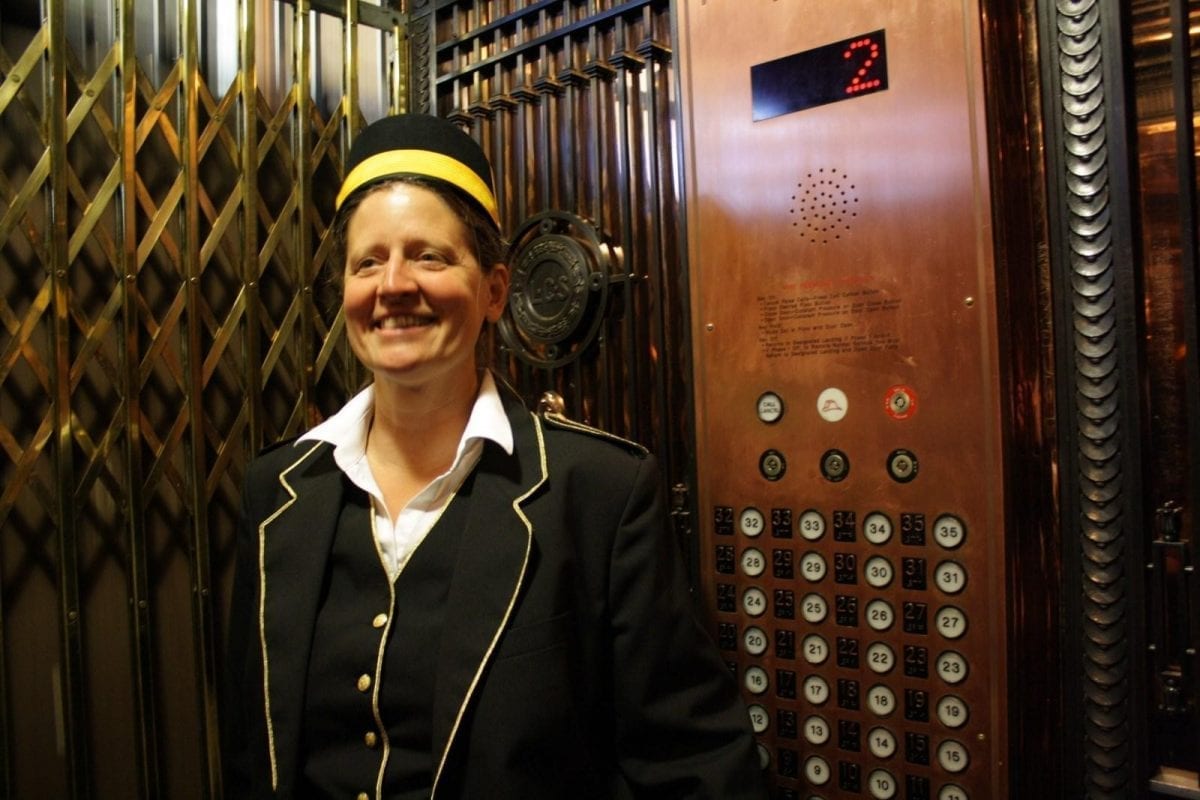
For most of us, our knowledge of elevator operators (or lift attendants in British English) comes from film and television. It would be easy to think that elevator operators were just there for show, like door greeters, in an attempt to establish a certain ambiance. In reality, elevator operators actually operated elevators; manual elevators were controlled by a large lever and operators had to regulate the elevator’s speed and stop not just at the correct floor, but parallel to the ground so that riders didn’t trip going in and out.
While the profession has been largely wiped out by push-button elevators, a handful of manual elevators still exist, and those buildings employ operators to work them. There are also operators who also serve as guides, such as in Seattle’s Space Needle or Kenan Thompson’s character in the Saturday Night Live David S. Pumpkins skit.
Switchboard Operator
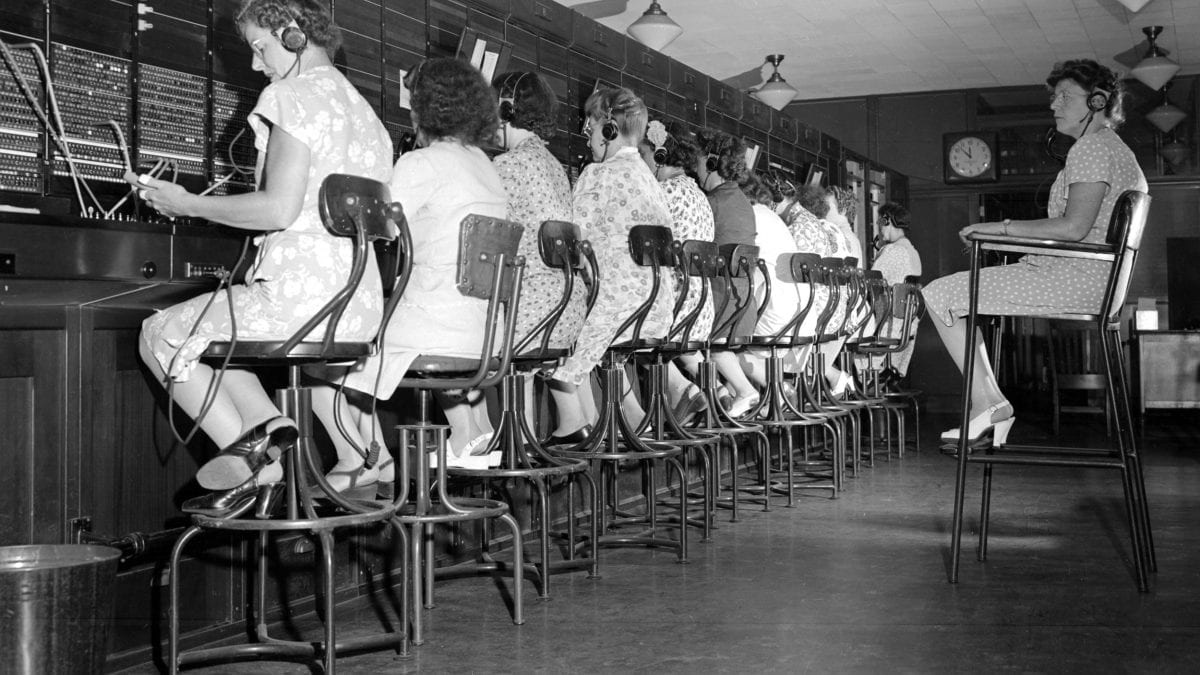

In the era of the smartphone, we’re pretty far removed from the days of telephone switchboards. It’s pretty amazing that you can now call across the world with the push of a digital button when as recently as thirty years ago there were still operators manually plugging in lines to connect callers. If you wanted to call long distance, it would often require multiple operators working in conjunction with one another and sometimes it even involved hand-cranked telephones.
The last manual switchboards were in operation in rural areas until the early nineties, when automation finally and completely wiped out a job that had existed for over 100 years.
Factory Worker
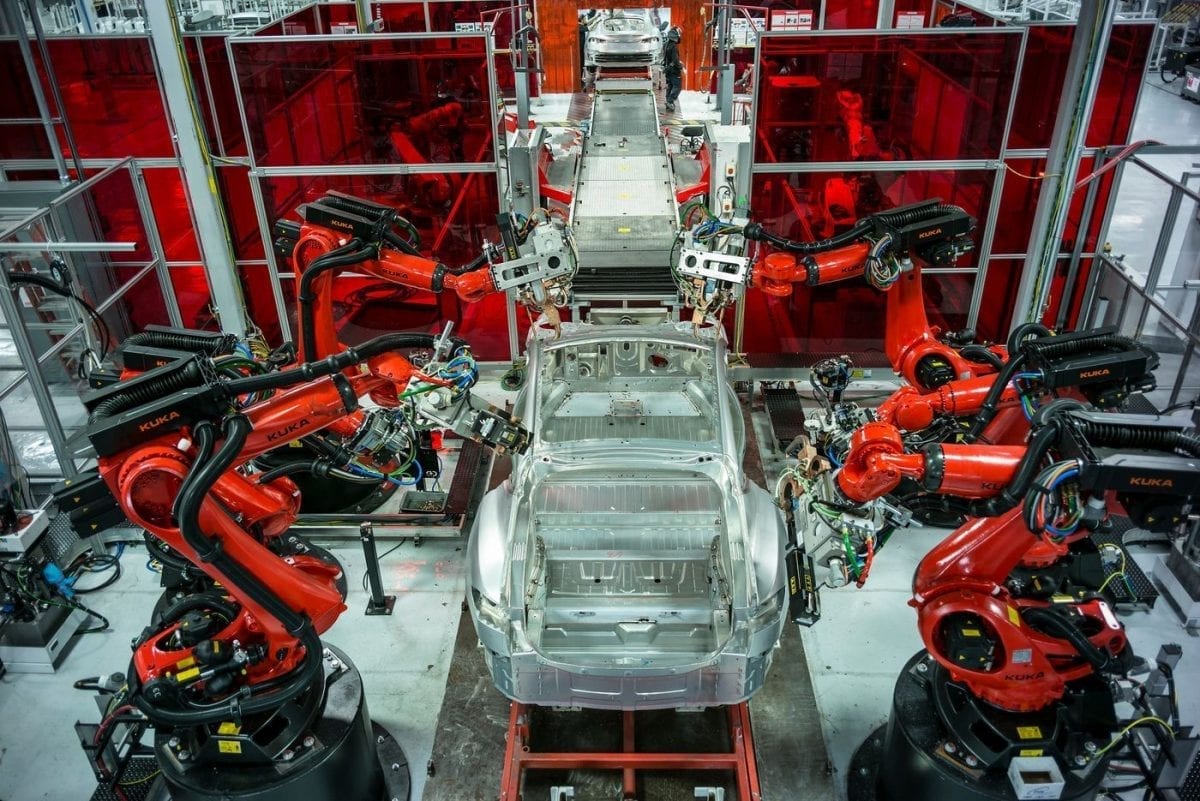

This one is a bit of a broad stroke, as factory work can consist of many things. When people think of early jobs taking over by automation, they think of assembly lines; big, clanky robot arms welding together automobile parts. Henry Ford is often credited as the father of the assembly line, and while it was inspired in part by mail order handling facilities and slaughterhouses, the modern assembly line was indeed developed to improve production of the Ford Model T.
Assembly line work is monotonous and specialized, so it’s no surprise that it was an early target for automation. It can also be fairly dangerous, and it’s been theorized that the repetitive nature of the work can lead to psychological harm, which only adds to the case for industrial robots.
Stockroom Worker
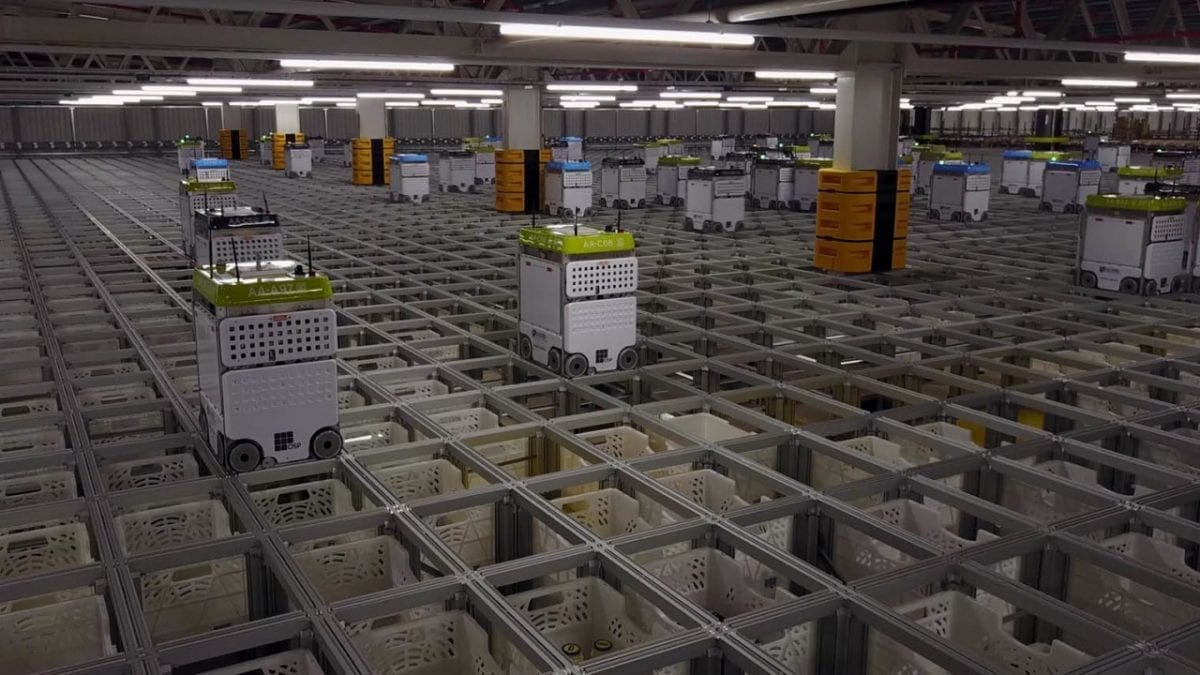
Robotic stockroom work is a fairly recent development, at least when compared with other jobs on this list. Amazon leads the charge, upping its robotic workforce by 50-percent to 45,000 robots between the 2015 and 2016 holiday seasons. The robots are deployed in the fulfillment centers and are responsible for locating and handling packages that need to be shipped. Tasks that used to take an hour or more to accomplish can now be done in about fifteen minutes, so it’s little wonder why Amazon CEO Jeff Bezos prefers his new robot army to the real thing.
Movie Projectionist

If you follow movies at all, you might know that the debate over film and digital has been raging for some time. As filmmaking moves away from physical celluloid, there are plenty of fans and filmmakers alike lamenting the change, claiming that traditional film brings something to the table that digital doesn’t. What digital does bring, however, is convenience.
Once upon a time, before digital projectors, movie theater projectionists had to load up reels of film and feed that film through the projector to display the movie that you see on the screen. Then, roughly halfway through the film, they had to quickly swap to the second reel to keep the film playing without interruption. It was a legitimate skill and one that’s no longer necessary in the digital age. Now projectors are largely automated and what little human interaction is required simply amounts to button presses.
Cashier


Out of every replaced job on this list, if this isn’t the one we encounter the most frequently, it’s certainly the most noticed. Self-checkout units, the brainchild of David R. Humble, started popping up roughly five years ago in major retail outlets. The process is simple: scan the barcode of the item or, in the case of things like produce, input it manually, weigh it if necessary on the integrated scale, then place it in the adjacent bagging area. Once all of your items are rung up, simply pay, bag your items, and leave. No human contact necessary.
The units are still monitored by human employees, generally just one employee per bank of self-checkout units. They’re there in case something goes wrong or a product or customer requires special attention. So yes, while these units have created a new job position for a human employee, each unit has also replaced a human cashier, so the net loss of jobs is staggering.
The system is far from perfect, however. Not only are the units themselves prone to failure (the phrase “unexpected item in bagging area” has entered popular culture), but they also reduce human interaction that, while a benefit to some, has resulted in generally lower customer satisfaction. And while shoplifting still requires a few tricks to pull off, it’s generally easier to fool a machine than a human, leading to more theft.
While self-checkout units have partially changed the face of retail, that change wasn’t enough for robot master Jeff Bezos, who took the concept even further with his Seattle-based Amazon Go store, which foregoes not only human cashiers, but cashiers of any sort. An intricate setup comprised of cameras and scales register every item as you pull it off the shelf and put it into your basket and your card – which is on file; you’re required to check in with your smartphone prior to entering – is automatically charged as you walk out the door.
Helpdesk Chatbots/Phone Operators

If you’ve ever tried to contact a larger company, you’re likely familiar with the process of an automated system trying to break down and direct your query/message to the correct department. This is a crucial process for companies that get a large volume of customer feedback and questions.
Over time, chatbots and automated phone systems have only become more capable. While it can still be frustrating at times – sometimes you just need to talk to an actual human representative and that’s that – the truth is that a large percentage of customer problems can be solved through these systems. They’re usually just elaborate FAQs – frequently asked questions – but if you experience an issue that’s been solved before, more often than not the automated system can present you with a solution. Yes, voice recognition systems still need work, so you will be screaming “issues with billing” into your phone a few times, but you’d be surprised at how often that cold, annoying robot can steer you in the proper direction.
Postal Workers

Postal workers have really gotten the short end of the stick, because not only was such a large chunk of their business taken out by the Internet, but they also have to contend with robots coming in and doing what little job they have left.
Did the advent of electronic mail hurt the USPS? Not really. Although it makes sense in theory that everyone switching from snail mail letters to emails would hurt their business, numbers show that isn’t the case. Just like they survived the fax machine, the postal service kept on chugging at a good pace well into the email heyday.
I did say the Internet took away their business, email just wasn’t the culprit. For starters, online billing hurt their bottom line. Nobody had to send letters, but you do have to pay your bills. Once online billing became a thing, USPS lost a lot of revenue. They even tried to beat the Internet to the punch with their own online billing service that would help customers pay their bills, but people soon realized it was an unnecessary middleman and it died out in a few years.
People did mail letters, though, and postcards were a popular way to stay in touch. It’s true that those have slowed down considerably, but it wasn’t due to email as much as social media. Why send your friend a postcard from Cabo when you can “send” a personal picture that you took yourself to your friends and family all at once by posting it on Facebook? The prevalence and accessibility of social media is the real culprit behind the death of handwritten letters and vacation postcards.
There’s still mail to sort, though. Despite the rise of paperless billing and online payments, a lot of consumers still prefer to get the actual bill in the mail. There are also magazines, online shopping, and subscription services. There’s work to be done and a lot of that work is done by automated mail sorters, which can process up to 55,000 #10 envelopes in an hour.
It’s not a great time to be a postal employee.
Pilots/Drones

The UAV, or unmanned aerial vehicle, was conceived for military use and are still primarily used for military applications. A highly classified U.S. Air Force UAV program codenamed “Red Wagon” was launched in 1959 in response to losing pilots flying over hostile territory. Designed for missions that are too “dull, dirty, or dangerous” for humans, they’re regularly used for surveillance purposes and precision military strikes. Fast forward to 2013 and at least fifty countries use UAVs, including China, Iran, and Pakistan.
Unmanned drones are slowly making their way into the consumer and commercial space. While they’ve been popular among photographers and extreme athletes for years for their recording capabilities, companies like Amazon are testing delivery drones that would take some of the load off of their human drivers. A drone-filled airspace is a relatively new development and regulations and laws regarding drone use are currently being worked out.
Fast Food

The fast food industry has begun to utilize machines in two facets of business: ordering and cooking. Chains like McDonald’s and Panera are using self-service kiosks to allow customers to place their orders. Considering that a lot of major fast food chains have mobile apps that can do the same thing, this isn’t surprising at all. The more interesting development is in the kitchen, where robots are taking over some of the meal prep duties. US burger chain CaliBurger utilizes a robot named Flippy that can flip patties and clean grills. Arby’s uses a smart oven that roasts beef before switching to holding mode, so employees don’t have to come in early in the morning to prepare for lunchtime. Shanghai has a KFC restaurant that doesn’t employ a single human being.
Those are just a few examples of the way the fast food industry is using more automation, but unlike a lot of other industries, they’re not replacing workers. According to Business Insider, fast food employee turnover rates hit a record high this year, so these new concepts and devices are actually filling gaps amidst a legitimate labor shortage.
We’ve Always Been Automating
The idea of robots taking jobs away from humans (and in effect, the food off their tables) is plenty worrisome, but the truth is every major industry utilizes automation of some sort and that’s nothing new. In most cases, these automated processes are in place to help the employees perform their jobs more effectively, not take the job from them. And the truth is that some jobs are simply too dangerous for human beings. Automation can and continues to be our friend in most cases.
I mean, until the inevitable uprising, of course.