


Drones. What may have once been a super niche product category for a very select few has dramatically attracted some huge mainstream appeal. These little flying quadcopters have gotten both much more affordable and more accessible for the general masses in recent years.
But before you go out and throw caution to the wind, read up on these rules for drone etiquette. Flying drones can be a real hoot, but you want to make sure that you’re doing it safely and legally. Let’s take to the sky, ’cause this pup’s gotta fly!
Don’t Get Too Ambitious Too Quickly
Remember the first time you got behind the wheel of your mom or dad’s car? Remember how nervous and excited you were? You should be experiencing the same kind of cautious anticipation when you head out for your first flight with your drone.
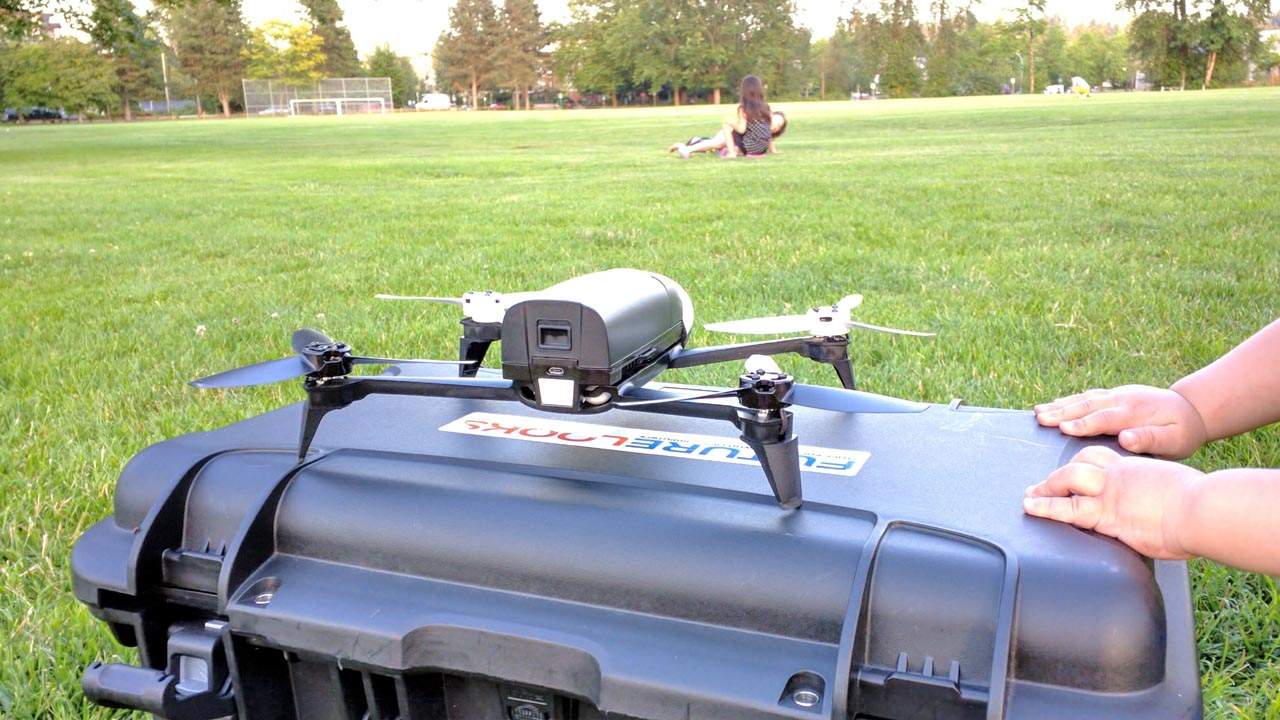
Take some time to familiarize yourself with the drone and with the controls. Many drones can now be piloted through a convenient mobile app and some, like the more advanced Parrot Bebop 2, give you the option to use a larger flight controller.
Take it easy. Take it slow. Don’t be like our very own Stephen Fung and take your drone into a tree. Once you get a little more comfortable with the controls, you can try some fancier maneuvers.

Do Get Creative With Video
Different drones come with different kinds of equipment. Some are meant only for flying, but many are equipped with some sort of camera or another. After you’ve taken some time to build up your piloting confidence, take to the sky and exercise that creativity muscle.
A great example is the flyover video that Stephen took (after he retrieved his drone from the tree) while we were at Harrison Hot Springs, just outside of Vancouver. He took the Parrot Bebop 2 and flew it over the lake, capturing the bouncy waterpark and the gorgeous natural scenery.
Don’t Fly It Inside
Do you notice something that the first two notes had in common? Both involved flying the drone outside. As much as you might want to fly your drone indoors, it’s probably not in your best interest. You may wreck your house and cause all sorts of expensive damage.
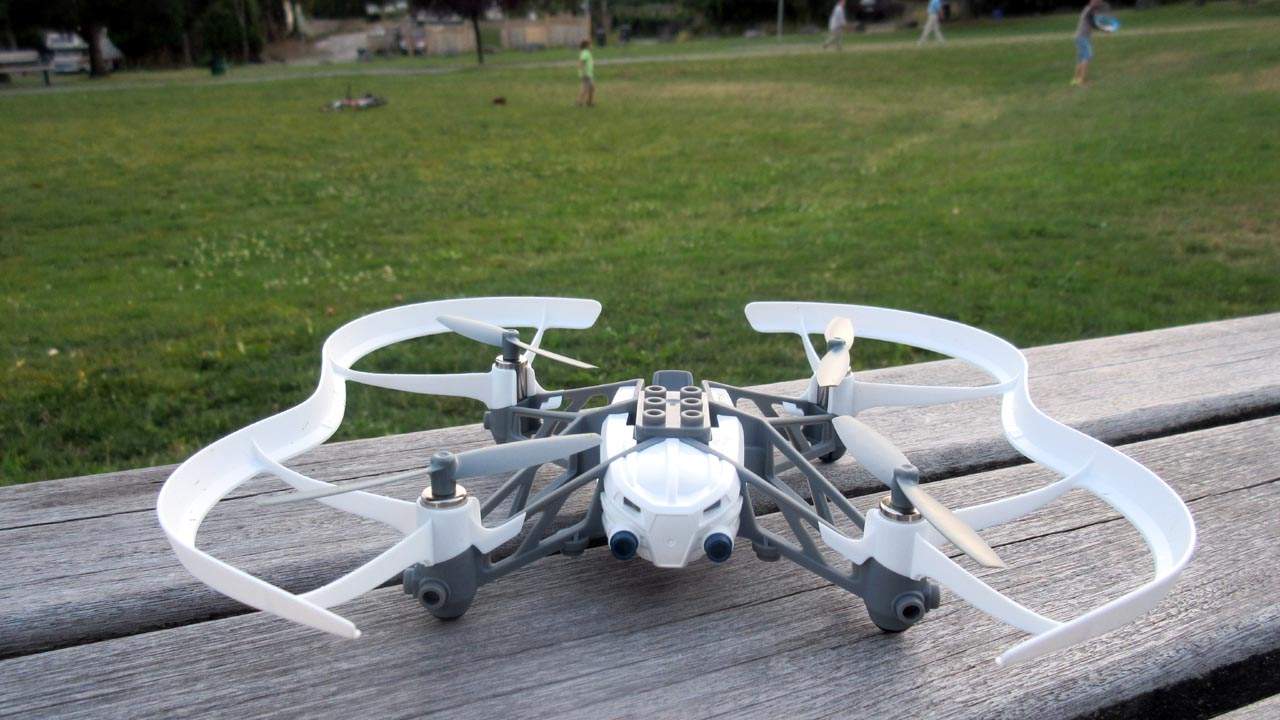
I really should been heeding my own advice, as the first time I decided to try flying the Parrot Mars mini drone, I did it in my home before I went to the park later that day. Flying inside can be a little easier because there’s no wind, but it’s far better for you to go outside.
And even when you’re outside, be mindful of your surroundings. If at all possible, avoid buildings, trees, power lines and other potential hazards. Look for open spaces like your neighborhood park or over a lake in a resort town.
Do Use Common Sense
As an otherwise average member of modern society, I’ve observed a couple things about my fellow man. First, common knowledge is remarkably uncommon. Assume nothing. Second, common sense can be even less common. Be special. Show some decency.
Even though this is going to sound very obvious, it still needs to be said, Use common sense when you take your drone for a flight. Don’t buzz a crowd in the city. Don’t sneak up behind strangers and have your drone hover in front of their face. Don’t try to fly your drone through a window.
In short, just don’t be stupid.


Don’t Fly Anywhere Near an Airport
You might think that you’re being super creative by trying to get a drone video flanking a Boeing 747 as it takes off from the runway. That adheres to the “be creative” rule stated earlier, but it’s about as against the “don’t be stupid” rule as it gets.
From what I can gather, there may or may not be any hard and fast rules about whether you can fly your hobby drone near an airport, but there are recommendations and guidelines. Transport Canada says you shouldn’t fly within nine kilometres of any airport, heliport or seaplane base. They call these “aerodromes” and they are all “no drone zones.”
A similar rule applies in the United States, as regulated by the Federal Aviation Administration (FAA). They say you should stay at least five miles (just over 8 kilometres) away from any airport. That said, other drone users say it can be fine as long as you ask for permission from the airport first. It’s a good idea to give them a heads-up either way.

Do Respect Other People’s Privacy
We may not have been bitten by a radioactive spider, but we all remember what Uncle Ben told us again and again through all of those remakes and reboots. With great power comes great responsibility. And flying a drone with a camera provides you with all kinds of great power.
How would you feel if someone was prowling around in your yard, peeking into your windows? Now replace that physical person with a drone equipped with a camera. The same rules of common courtesy and decency apply. Don’t go flying your drone in private spaces and invaded people’s intimate lives.
News stories abound with peeping Toms using peeping drones to look into people’s homes at night. There was a local story here in Vancouver with someone flying a drone around apartment balconies. Don’t do that.

Don’t Use Drones to Hunt Wildlife
It used to be that heading out into the great outdoors was a way to get away from it all, putting technology behind so you can reconnect with nature. But that’s not really the case for anyone reading MEGATechNews, now is it? We want our Wi-Fis, our touchscreens and our bigger gee-bees.
Just as there are all sorts of gadgetry to assist with your fishing, you may tempted to use your drone to scout out some wildlife for your hunting exploits. And that would be illegal, at least in British Columbia. The Wildlife Act hunting regulation has been amended such that drones are basically treated the same way as helicopters.
So, you’ll just have to do it the old fashioned way like Bear Grylis.

Do Get an Extra Battery
Do you know what’s a lot of fun? Flying a drone. Do you know what isn’t as fun? Having to trek all the way home because your battery has already run dry. In the case of the Parrot Mars mini drone, the provided 550mAh battery only gives about 9 minutes of flight time on a single charge.
That’s typical of minidrones, because they need to stay as lightweight as possible and batteries can be awfully heavy. A very solid investment is to buy an extra battery for under $30, which comes with a micro-USB based charging unit of its own. Complete your set with a USB power bank and you can have one battery charging while you fly with the other.
Want to go on longer expeditions? Higher end drones like the Bebop 2 from Parrot can get up to 25 minutes on a single charge of the 2700mAh battery, depending on flight conditions.

Don’t Lose Sight of Your Drone
As you take that quadcopter zipping around with the greatest of ease, it can be pretty easy to lose track of where it is. This is true of drones of all sizes, as the larger drones typically also provide an even greater range.
You might think that you’ve got a handle on things if you’ve got a drone with a live video feed. The problem is that the camera can only point in one direction at a time and you might not be aware of other nearby hazards. The Wi-Fi connection can also get iffy at longer distances, so when your image starts to break up, you should at least have some idea of where it is.
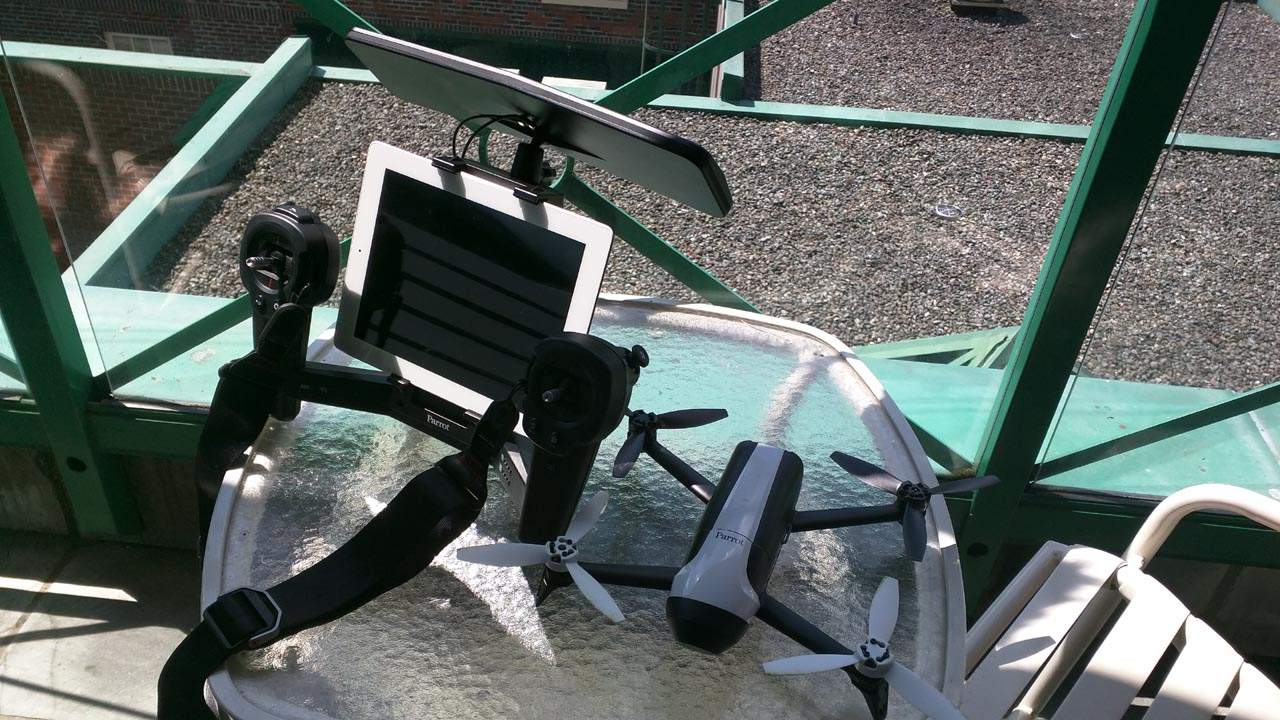
Better still, go flying with a buddy. One of you can man the controller while the other keeps actual eyes on the actual drone. The larger flight controller for the Bebop 2 gives you much better range, but that carries the increased risk of losing sight of your drone too.

Do Ask for Permission First
Before you decide to fly your drone anywhere remotely close to an airport, as mentioned earlier, you should ask the people in the flight control tower if you’ve got their okay. Take the same kind of diplomatic approach any time you’re thinking about flying your drone where other people may disapprove.
You might be surprised. Think it would be awesome to get an overhead crowd shot at a mega outdoor music festival? You’re not the only one and it could prove to be a safety risk.
That’s why Glastonbury has banned drones (unmanned aerial vehicles) at their festival. It’s illegal and other massive gatherings will likely institute similar bans.

Don’t Hunt Pokemon With It
Pokemon GO has gotten everyone pretty darn excited about trying to catch them all. It has even led to people walking off of cliffs and into multiple lanes of traffic.
Hunting Pokemon with a drone might sound like the safer choice, because you are not putting your own body in harm’s way. But it also doesn’t work. Yet. Just as it’s cheating to place your phone on a turntable or ceiling fan to fake those steps so you can hatch your eggs, it’s also cheating to use a drone to hunt down a Jigglypuff.
Just put on a good pair of walking shoes and do it the old fashioned way. That’s the only way you can be the very best, like no one ever was.

Don’t Exceed the Maximum Altitude
It’s pretty obvious that one of the biggest advantages drones have over radio-controlled cars is that the latter have a maximum altitude of precisely zero feet. If you’ve got a drone, you want to fly. Just don’t fly too high.
There are regulations in place for the maximum altitude “hobbyists” can take their unnamed aerial vehicles. In Canada, that’s 90 meters (or just under 300 feet).
If you’re unsure about whether or not you’re getting too close to the limit, you can set these physical limits inside the Parrot Free Flight app for drones like the Mars and the Bebop 2. That’s also where you can fiddle with settings like the maximum banking angle.

Do Remember to Have Fun!
At the end of the day, the most important rule to follow when flying a drone is to have fun. They’re designed for experimentation and creativity, so let your imagination run wild and share those glorious pictures and videos through social media.
I really think using some of that drone footage in our test drive of the 2017 Ford Fusion really kicked the video up a professional notch or two. But even if you get a drone with limited video capabilities, just flying it around can put a huge smile on your face.
For more on how to fly your drones safely and legally, check out the websites for Transport Canada and the US Federal Aviation Administration. Up, up and away!